
Measuring Slope Steepness
The easiest way to determine the percent slope of an area is to measure the change in height (elevation over a measured distance), then calculate the percentage of slope. Use the following formula to determine slope:
Rise ÷ Run = Slope %
OR
(Change in elevation ÷ measured distance = slope %)
e.g. 30 metres ÷ 100 metres = .3 or 30%
Calculating a slope steepness index for a map area
Stages:
-
Calculate map area in km²
-
Place 10 X 10 grid overlay over map
-
Calculate % slope for each grid square
-
Present results as an area average or median slope for the area (see chart example below)
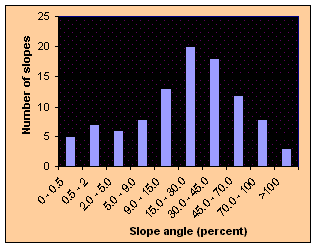 |
Slope Angle Index Chart
 |
Transparent grid overlay (11 X 11)
| Slope (%) | Approximate degrees | Terminology |
|---|---|---|
| 0 - 0.5 | 0 | Level |
| 0.5 - 2 | 0.3 - 1.1 | Nearly level |
| 2 - 5 | 1.1 - 3 | Very gentle slope |
| 5 - 9 | 3 - 5 | Gentle slope |
| 9 - 15 | 5 - 8.5 | Moderate slope |
| 15 - 30 | 8.5 - 16.5 | Strong slope |
| 30 - 45 | 16.5 - 24 | Very strong slope |
| 45 - 70 | 24 - 35 | Extreme slope |
| 70 - 100 | 35 - 45 | Steep slope |
| > 100 | > 45 | Very steep slope |
Standard slope descriptors
Slope Profile Maker using Slope Angles