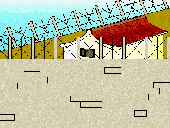
| If the walls around a house are higher than the buildings, then
this will cause a loss of wealth. |
 |
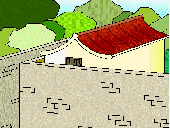
| The house and walls should be at least two feet apart, or the
owner may never succeed in life. |
 |
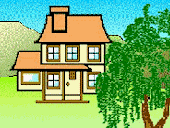
| A willow tree in front of the house will take away any luck that
the owner has. |
 |
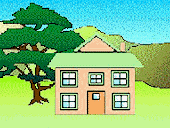
| Pine trees to the west of the house bring wealth. Owners tend to
succeed at work. |
 |
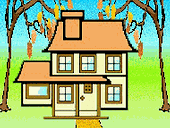
| Dead trees around a house are bad for the mental health of its
occupants. |
 |
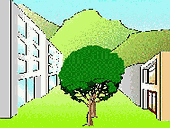
| When the doors and windows of two buildings are face to face, a
tree in the middle will dissolve the feeling of hostility. |
 |
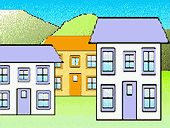
| A house taller than others around it has bad Fengshui and brings
bad luck to its owners. |
 |
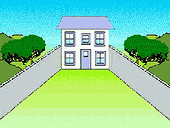
| Homes located at the end of an alleyway have extremely poor
Fengshui. |
 |
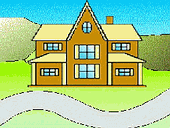
| A meandering road in front of a house brings peace and comfort. |
 |
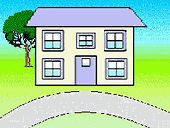
| A road bending towards the front door brings bad luck. The
occupants tend to suffer from accidents and violence. |
 |
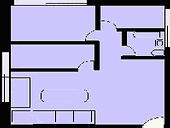
| The first room one sees upon entering a house should not be the
kitchen or bathroom, otherwise the family will suffer from the loss of fortune. |
 |
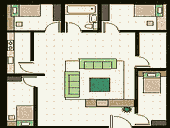
| A living room in the centre brings prosperity. |
 |
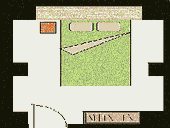
| A bedroom should not have too many corners, or peace within the
family will breakdown. |
 |
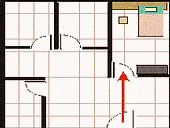
| The bedroom should not be in line with the front door, as this
may lead to a breakdown of trust within the family. |
 |
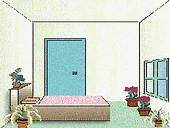
| The bedroom should not be filled with flowers, as these will
dominate the atmosphere. |
 |
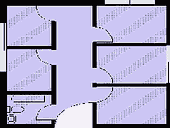
| A hallway cutting the house in half will lead to family
divisions. |
 |
