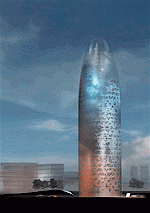
22@: Update: more reality, less a project?
The 22@ new technological district in the Poblenou area of Barcelona is more a project that a reality, according to the opinion of some large international investors. However, research in June 2007 shows it is now being warmly received by the business community.
|
February 2006: Less reality, more a project?
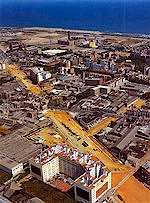
Xavier Cama, director of Barcelona consultants Cushman & Wakefield Healey & Baker, believes that the majority attitude is to wait for the 22@ developments be consolidated. Investors currently prefer a more central location along the Diagonal and Passeig de Gràcia. However, because of the shortage of available land, Cama believes that half of the new office space in Barcelona will have to be concentrated in the 22@ district in the future. “If the buildings in progress are rented, the international investors will come”. The 22@ district occupies 115 city blocks, with a surface of 200 hectares and with a potential to build 4 million m² of floor space. Of this, 3.2 million m² would be allocated to offices and commerce. According to Council estimates, the transformation of the district will require an investment 12,020 million euros over a period of 15 or 20 years.
The crisis in the technological businesses after the crash of the Internet bubble in March 2000 has affected the growth of district. For Cama, 22@ will be converted “into a tertiary zone, of offices and commerce, important to the city”. It will not, however, be able to be focused on the new technologies, since many of the companies are in crisis and will delay their new investments for a number of years. Besides, “Barcelona has probably arrived too late in this sector and cannot aspire to attract multinational headquarters, but should develop specialist clusters such as Design Centres”. Despite the investment caution, all new buildings in the 22@ district have been rented or sold before construction has been completed. Among the users there are important Spanish companies such as Agbar, Gas Natural, Amper or Retevisión, and multinationals including T-Systems (Deutsche Telekom), General Electric, Liberty or la Citada Axa. The price of the rents, in addition, have stayed around 15 euros m²/month, with higher values in the buildings near Glòries, where the office market has consolidated. |
|