
Longshore Drift
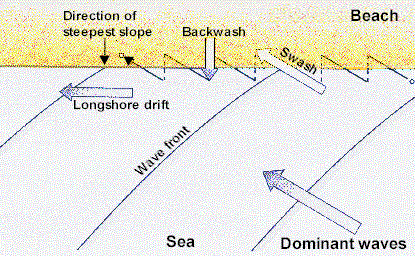
Where waves approach the coastline at an angle, when they break their swash pushes beach material up the beach at the same angle. The backwash then drags the material down the beach perpendicular (at a 90º angle) to the shore, following the line of the steepest gradient. This produces a zig-zag movement of sediment along the beach known as longshore drift. Largest beach sediment is found updrift, and the smallest material, which is more easily moved, downdrift.
 |