
Food or Gastronomic Tourism and Rural Development
During the 20th Century, industrialisation began to threaten artisan producers and many abandoned their traditional techniques. But in the past two decades, there has been a resurgence in demand for quality products made by time-honoured methods.
Gastronomy is one of the elements incorporated in a new concept of cultural heritage and cultural tourism, driven by growing trends of a well-being lifestyle, authenticity, environmental protection and the need to have a high-quality experience. Tourists increasingly want foods which emphasise the heritage and culture of a place, which assist the preservation of traditional forms of agriculture and cultural heritage.
Gastronomy, as a tourist resource, is appreciated not only for its own sake, but also for its ability to generate rural development. Gastronomic tourism is helping to increase rural revenue sources and improve income levels and employment of local labour (especially women).
Food also holds a key place in the "think globally, act locally" debate. Some buyers are keen to support local businesses, or protect the environment by avoiding foods which have been transported long distances.
What are the trends driving food tourism?
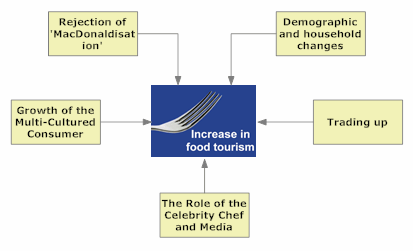 |
| The trends driving food tourism |
Trend 1: Trading up
All across world, growing affluence of the populations has a profound impact on consumer spending. Consumers spend a higher proportion of their income on prepared food, gourmet products, eating out and food items with some form of health or ethical benefits. For discretionary purchases, consumers have traded up where the product is aspiration or traded down when the product is only function.
Trend 2: Demographics and Household Change
An ageing population and changing life styles have driven demand for increased eating out and food tourism opportunities. Groups that provide growing markets for food tourism are summarised in the table below.
Groups that provide growing markets for food tourism DINKS: Double Income No Kids. |
Trend 3: Rejection of 'MacDonaldisation'
Tourists have increasingly rejected the industrial 'fordist' model of low cost mass production of food, searching out local, fresh and good quality cuisine that reflects the authenticity of the destination. The end of the 'MacDonaldisation' of food culture has seen Starbucks fail in Australia as the brand is perceived as bland and lacking individuality.
Trend 4: Growth of the Multi-Cultured Consumer
Multiculturalism has become an everyday concept in the daily life of the consumer, driven by immigration, globalisation, the internet, the expansion in specialist and minority TV channels and the relentless growth in international tourism. What were once exotic foods have become foods of first choice and today curry is the United Kingdom’s favourite dish.
Trend 5: The Role of the Celebrity Chef and Media
The emergence of the niche food programmes, TV channels and magazines means the food celebrity and expert has been created. The celebrity chef shapes tourism products in a way that is often referred to as the 'Delia effect' after the media chef Delia Smith, whose 1998 television programme 'How to Cook' resulted in an extra 1.3 million eggs being sold in Britain each day of the series. The phenomena of Gordon Ramsey with 'Hells Kitchen' and the 'F word' or Jamie Oliver's campaign for good wholesome school dinners all drives our interest in good quality food.