|
For Management Plans
• Tourists
They enjoy the accommodation in the Park and the scenery. On
the other hand, they resent the crowds and traffic they have attempted to escape
by going to the mountains.
• Environmentalists
They believe that a general reduction in commercialization and the number of
cars will enable the park to restore some of its already impacted ecosystems.
Facilities and development should be located outside the park and that a
regional transportation system should be set up, using fees paid by businesses
located in the Park.
• Artists, Photographers and Writers
They need to gain inspiration for their artistic work and would be willing to
use public transportation if it meant less congestion in the park.
• Business owners in outlying areas
If there is a reduction in the number of people allowed in Yosemite Valley,
their businesses could suffer. On the other hand, more people might seek their
services if facilities inside the park were limited.
|
Against Management Plans
• Tourism-related businesses
The importance of tourism to the local economy can be
illustrated by the impact of the catastrophic 1997 floods that closed the Park.
This caused locally severe economic losses to the areas around the park. In the
most heavily impacted area, Mariposa County, 1997 personal income was reduced by
an estimated US$1,159 per capita (US$18 million for the entire county) - a 6.6%
decline. The county was also estimated to have lost US$1.67 million in county
occupancy and sales tax revenues, and 956 jobs, a significant number in a county
of fewer than 16,000 residents. Any plan that reduces visitor numbers will have
a severe impact upon the wider economy.
• Land Rights Association
"What they're doing is nothing less than stealing a
national park from the people," says Chuck Cushman, founder and executive
director of the American Land Rights Association. "They're taking out
60 percent of the car-accessible, drive-in family campsites including all
the river campsites, which is where people like to camp. 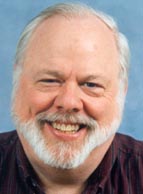 They're reducing the parking by 75 percent
of what was there in 1980 – and with no parking people will be forced to use
buses, which will be especially hard for the handicapped and the elderly and
young families. That's the killer. What young family is going to want to travel
around the park like that, with babies and small children, loaded down with
diaper bags, picnic supplies and all their other gear? It's nuts." They're reducing the parking by 75 percent
of what was there in 1980 – and with no parking people will be forced to use
buses, which will be especially hard for the handicapped and the elderly and
young families. That's the killer. What young family is going to want to travel
around the park like that, with babies and small children, loaded down with
diaper bags, picnic supplies and all their other gear? It's nuts."
National Government
The contract to operate the hotels and business operations is worth more than $1
billion in gross revenue. Over 20% is returned to the federal government, which
owns all major buildings in Yosemite. This revenue will fall if there is a
reduction in visitors.
• Resident of El Portal
The small town of El Portal lies outside the park and may become much larger if
all the development in the park is relocated. The town is on a wild and scenic
river, which would be affected by development.
• Yosemite Educational Institute
If all Park developments are moved out of the park, environmental education will
be far less effective. This should take place within the Park, which provides
the ideal natural resource.
• Park Employee
Employees would be rehoused outside the Park, losing one of the
key benefits of their job - a house with a view.
• Visitors
Many feel that the plan has the "ultimate goal of turning Yosemite
National Park into a sort of living museum," the idea being "to remove
virtually all human imprint." Once the plan is fully implemented it will be
"almost impossible for anyone to enjoy [Yosemite] in the manner that's been
available to visitors since the 1800s".
"If those changes are made, it will be harder to get in – raise
the entry fees, prohibit certain traffic and reduce available roads; impossible
to drive in – can't have those exhaust fumes; almost impossible to camp
in – people can be so messy and campfires pollute; impossible to horseback
ride in – horses trample the brush and manure spreads seeds not native to
the area; difficult to hike or bike through – those paths deface
meadows and woods; or even raft in the river – rafters disturb the fish
and disturb the beaches. They actually want to remove restroom facilities!" |
